Starting a music event planning business can be a rewarding venture if you’re passionate about music and have strong organizational skills. Whether it’s a small concert, a local music festival, or a corporate event, there are endless opportunities in the live music industry. In this article, we’ll explore practical ideas and steps to help you start a successful music event planning business.
1. Understand the Music Event Industry
Before jumping into the business, it’s important to understand the industry. The live music scene is diverse, ranging from local gigs to large-scale music festivals. It’s essential to know the different types of events you might organize and the specific challenges each type presents. For example, festivals require extensive logistics and permits, while smaller concerts may focus more on marketing and talent booking.
Start by researching the types of music events that interest you. Do you want to focus on small, intimate concerts or large, multi-day festivals? Understanding your niche will help you target the right audience and set realistic goals for your business.

2. Define Your Target Market
The next step is to define your target market. Knowing who you want to reach will guide your event planning process. Are you targeting music lovers in your city, or are you aiming for a national audience? Will you focus on a specific genre, such as rock, electronic, or country music?
Knowing your audience allows you to plan events that meet their needs and preferences. For example, a classical music concert may require a different approach than a modern rock festival, so be sure to tailor your services to the right market.
3. Build Relationships with Vendors and Suppliers
A successful music event requires many moving parts, including sound and lighting equipment, stages, food vendors, and more. Building solid relationships with reliable vendors and suppliers is crucial. Research potential suppliers in your area and make sure they align with your business values.
Start by networking with local vendors, such as sound engineers, lighting technicians, and event spaces. Having a trusted list of suppliers will ensure that your events run smoothly and that you can secure quality services at competitive prices.
4. Develop a Solid Marketing Plan
Marketing is an essential component of any successful music event. It’s not enough to just book a venue and talent—you need to attract an audience. Use both digital and traditional marketing strategies to spread the word about your events.
Leverage social media platforms like Instagram, Facebook, and TickTok to promote your events. These platforms allow you to engage with potential attendees, share behind-the-scenes content, and build excitement. In addition to online marketing, consider using posters, flyers, and local partnerships to reach a broader audience.

5. Focus on Ticket Sales and Pricing
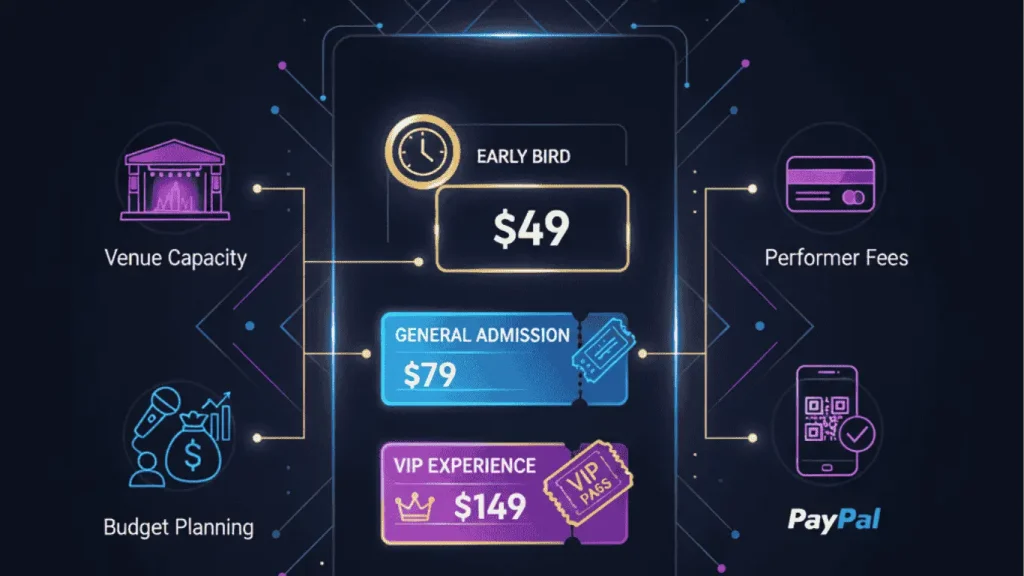
Pricing your event tickets correctly is a balancing act. Too high, and you risk turning off potential attendees; too low, and you might not cover your costs. To determine the right price, consider factors such as your venue size, the talent you’re booking, and your event’s overall costs.
You may also want to offer tiered pricing, such as early bird tickets at a discounted rate or VIP passes for exclusive access. Make sure your ticketing platform is user-friendly and easy for customers to navigate. Offering different payment options, such as credit cards and PayPal, can also boost sales.
6. Prepare for Event Logistics
Event logistics are where the real work comes in. From securing the venue and permits to organizing transportation and accommodations for performers, there’s a lot to manage. Create a detailed checklist to ensure every aspect of the event is covered.
For example, you’ll need to confirm details with the venue, make sure all permits are in place, and set up transportation for artists and equipment. The more prepared you are, the smoother the event will run.
7. Build a Strong Team
As your business grows, you’ll likely need a team to help you handle the workload. Building a reliable team is essential to scaling your music event planning business. Look for individuals with specific skills, such as event coordination, marketing, or technical expertise.
Hiring a team will allow you to focus on bigger picture goals while others handle the day-to-day tasks. Start by hiring freelancers or part-time employees until you can expand further.
8. Legal and Financial Considerations
When starting any business, it’s essential to get your legal and financial matters in order. Consult a lawyer to ensure that you’re operating legally and that you have all necessary permits for your events. You may need insurance to protect yourself from potential liabilities.
Additionally, set up a solid accounting system to manage your finances. Keep track of your expenses, ticket sales, and vendor payments. This will help you stay organized and profitable as you grow your music event planning business.
9. Make the Event Unforgettable
The success of your music event depends on the experience you create for attendees. Make sure to focus on every detail, from the venue’s atmosphere to the performances on stage. A memorable event will lead to repeat business and positive word-of-mouth referrals.
Provide exceptional customer service and engage with your audience throughout the event. Set up social media posts and encourage attendees to share their experiences. The more your audience feels connected to your event, the more successful it will be.

10. Expand Your Offerings
Once you’ve established your business, consider expanding your services. You could branch out into other areas of event planning, such as corporate events or private parties. Diversifying your offerings can increase your revenue streams and attract new clients.
Additionally, consider offering additional services like event consulting or talent management. The more versatile your business becomes, the more opportunities you’ll have for growth.
Conclusion
Starting a music event planning business can be a fun and profitable venture. By understanding the industry, defining your target market, building strong relationships, and focusing on logistics, you can create successful and memorable events. With hard work, persistence, and a solid plan, you can turn your passion for music into a thriving business.
1. How do I start a music event planning business?
To start, research the industry, define your target market, and build relationships with vendors. Then, create a solid marketing plan and prepare for event logistics.
2. What permits do I need for hosting a music event?
The permits vary by location and event type. Common permits include noise permits, alcohol permits, and public assembly permits. Be sure to check with local authorities.
3. How can I attract attendees to my music event?
Utilize social media marketing, local partnerships, and word-of-mouth to spread the word. Early bird ticket offers and targeted ads can also help attract more attendees.
4. What is the best way to price tickets for my event?
Research your event’s costs and consider offering tiered pricing, such as early bird or VIP tickets. This can help maximize sales while catering to different budgets.
5. How do I handle logistics for a large music event?
Create a detailed checklist covering all aspects of the event, from securing the venue to coordinating with vendors and managing transportation. Stay organized and prepared.
6. Can I expand my music event planning business?
Yes! Once you’ve established your business, consider expanding into other event planning services, such as corporate events, or offering additional services like talent management.